 6
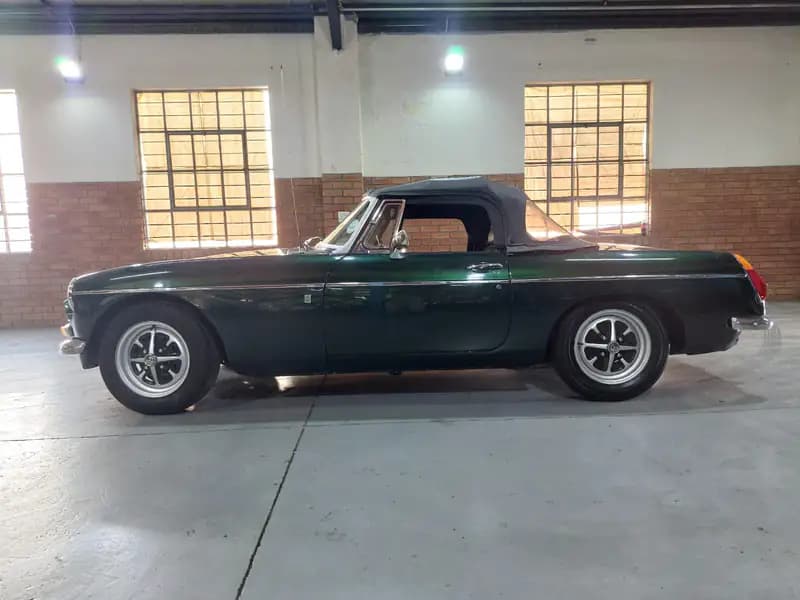
1972 MG MGB MK3
- Manual
- 1265 miles
- Green
R200 000View car

Italian Coachbuilt Elegance. German Air-Cooled Reliability.
Widely celebrated as one of the most sculptural automotive designs of the twentieth century, the Volkswagen Karmann Ghia Type 14 proves that timeless beauty doesn't require exotic complexity. Penned by Luigi Segre at Italy’s legendary Carrozzeria Ghia and hand-finished by German coachbuilder Karmann, its sweeping, seam-free fenders and low-slung silhouette still turn heads faster than modern supercars.
Collectors universally regard 1967 as the definitive "sweet spot" year for the Karmann Ghia. As a single-year transitional model, the '67 retains all the delicate, sought-after early styling details—including the slim "towel-rail" bumpers, small round taillights, and classic dashboard layout—while introducing major mechanical upgrades that make it dramatically better to drive in modern traffic.
KEY SPECIFICATIONS & HISTORICAL HIGHLIGHTS
• The 1967 Mechanical Sweet Spot: Powered by Volkswagen’s upgraded 1,493 cc (1.5-litre) air-cooled flat-four boxer engine producing 53 bhp (SAE)—delivering noticeably stronger torque and effortless highway cruising compared to earlier 1200 and 1300 models.
• Crucial One-Year-Only Upgrades: 1967 was the first year for standard 12-volt electrics, front disc brakes (with dual-circuit braking), and a wider rear track with improved swing-axle geometry—combining vintage chrome aesthetics with modern stopping power and reliability.
• Hand-Finished Coachwork: Unlike mass-produced cars of the era, Type 14 bodies were painstakingly butt-welded, hand-leaded, and smoothed by Karmann craftsmen to achieve uninterrupted, flowing lines without visible body seams.
• Mid-Century Cockpit Charm: Features the classic painted metal dashboard with woodgrain-style trim, crisp VDO instrumentation (including an analog clock), a wide-rimmed steering wheel with chrome horn ring, and low-back bucket seats.
• Blue-Chip Air-Cooled Collectability: With early "small-bumper" Karmann Ghias soaring in value worldwide, a 1967 model offers the rarest combination of early-series visual purity and late-series mechanical usability.
Contact us today to get your hands on this beauty.